Why New-Build Homes Have Blinking Breakers & Ground Faults
New home but blinking breakers and dead circuits? Learn what those ground fault codes mean, why new builds have issues, and when to call an electrician.
Why New-Build Homes Can Have Ground Fault Problems
We recently got a call from a homeowner — let's call him Jason — who had just moved into a brand-new duplex. Beautiful place, new appliances, everything still smelled like fresh construction. But there was one big problem: some of the major electrical equipment simply wouldn’t turn on.
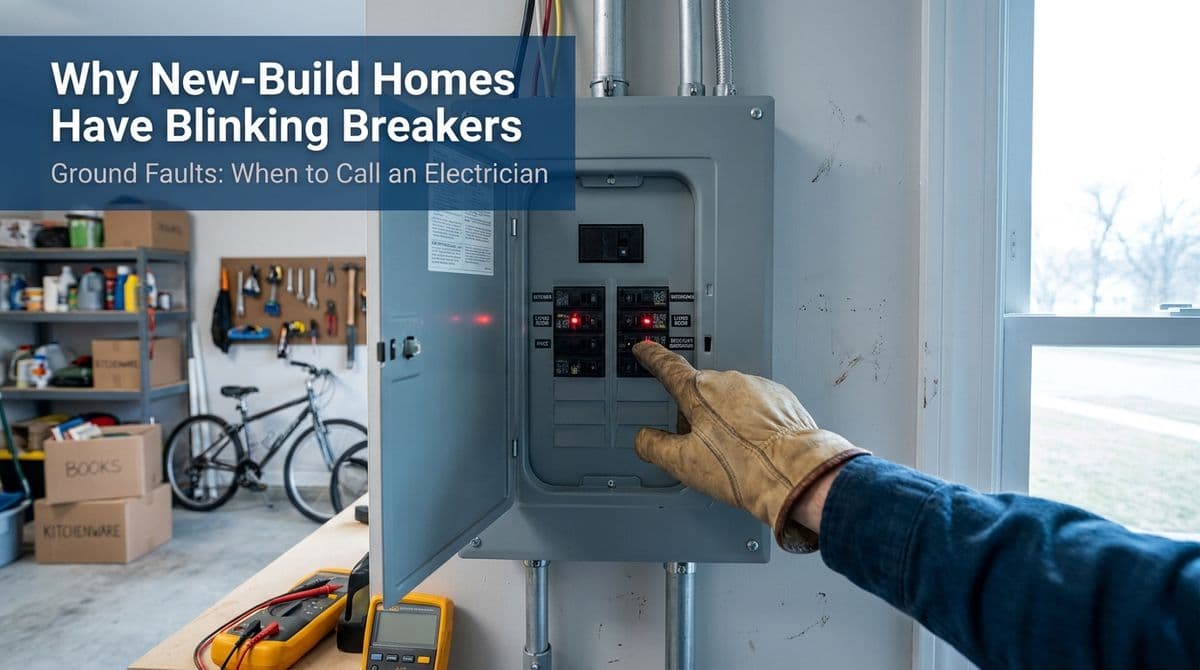
Jason told us parts of the home weren’t powering up, including the refrigerator and one of the electric water heaters. When he went out to the electrical panel to investigate, he noticed several breakers with tiny lights blinking five times in a row. A quick online search told him it was a ground fault issue, and that’s when he called us.
We hear this kind of story more often than you might think, especially in new builds where the homeowner and the contractor have already “parted ways,” like in Jason’s case. Let’s walk through what those blinking breakers mean, why new homes can still have electrical issues, and when it’s time to call an electrician.
What Does a Blinking Breaker Actually Mean?
Most modern breakers, especially GFCI (ground-fault circuit interrupter) and AFCI (arc-fault circuit interrupter) breakers, have small LED lights that flash in patterns to tell us what’s wrong. Different brands use different codes, but a series of blinks almost always points to a specific type of fault.
When Jason said his breakers were giving him five blinks, we knew that brand’s code was indicating an actual ground fault, not just a nuisance trip. In other words, the breaker wasn’t being overly sensitive — it was detecting electricity going somewhere it shouldn’t.
That’s why the breakers were staying off and his equipment wouldn’t power up. The breaker was doing its job: shutting down the circuit to prevent shock and fire hazards.
Why Ground Faults Happen in Brand-New Homes
It’s easy to assume a new home means “no problems,” but we see ground fault issues in new builds fairly regularly. Some common causes we run into include:
- Wiring nicked during construction: A screw, nail, or staple can accidentally pierce a wire behind the wall, causing current to leak to ground.
- Moisture in outlets or equipment: Unfinished exterior outlets, damp crawlspaces, or water around outdoor receptacles can create ground paths.
- Miswired circuits: Shared neutrals wired incorrectly, reversed hot/neutral, or ground and neutral tied together in the wrong place.
- Damaged or defective devices: A faulty outlet, light fixture, appliance, or water heater can trigger a ground fault as soon as it’s energized.
- Temporary construction hookups left in place: Job-site plugs, extension setups, or temporary lights not removed or properly terminated.
In Jason’s situation, the fact that multiple circuits weren’t powering up — including a refrigerator and an electric water heater — told us we were likely dealing with either a wiring issue, a device problem, or a combination of both, not just a single bad breaker.
What We Typically Check on a Service Call Like This
When we go out to a new-build home with blinking breakers and no power to certain areas, we follow a pretty methodical process. Homeowners often appreciate knowing what we’re actually doing while we’re there, so here’s a simplified look at our usual checklist:
- Confirm the breaker code: We verify the brand and model of the breaker and double-check what the blink pattern actually means according to the manufacturer.
- Inspect the panel: We look for loose neutrals or grounds, double-tapped breakers, incorrect terminations, or obvious signs of overheating or damage.
- Isolate the affected circuits: We turn off and label the specific circuits that are tripping so we can safely test them one at a time.
- Test wiring continuity and insulation: Using professional meters, we check for shorts between hot, neutral, and ground that might be hidden behind walls.
- Check devices and loads: We open outlets, switches, and junction boxes on the affected circuits, and we disconnect appliances or equipment (like a water heater) to see if a specific device is causing the fault.
- Document everything: For new builds, we carefully note what we find in case you need to go back to your builder, contractor, or warranty company.
By the time we’re done, we can usually tell you whether you’re dealing with a simple fix — like a miswired outlet — or something that may require more extensive repair or coordination with the builder.
How We Work with Builders and Warranties on New Homes
New construction adds another layer to the problem: warranty coverage and responsibility. Many homeowners, like Jason, are caught between a builder who has moved on and a house that isn’t fully functional.
When we’re called into a new build, we do a few things to help protect you:
- Provide clear written findings: We document what’s wrong in plain language you can share with your builder, warranty provider, or inspector.
- Identify workmanship vs. equipment issues: We try to distinguish between a bad device (like a faulty GFCI outlet) and a wiring or installation problem.
- Coordinate with other parties when needed: With your permission, we can speak directly with your builder, home warranty company, or inspector to explain our findings.
- Offer code-compliant solutions: Any corrections we make are done to current electrical code so you’re protected going forward.
All of this helps you avoid getting stuck in the middle or paying out of pocket for something that should have been covered by the original contract or warranty.
Tips for Documenting Issues in a New-Build Home
If you’re in a situation like Jason’s, where the relationship with the contractor is strained or over, good documentation becomes very important. Here are some practical steps we recommend:
- Take photos and short videos: Capture the blinking breakers, any error lights on equipment, and areas with no power.
- Write down what doesn’t work: Make a simple list: which rooms, which outlets, which appliances or water heaters aren’t working.
- Note dates and conversations: Keep a record of when issues started and any communication you’ve had with the builder or warranty company.
- Don’t open things you’re not comfortable with: It’s better to leave panel covers and wiring terminations to us; just document what you can safely see.
When we come out, this information helps us zero in on the problem faster and gives you a clear paper trail if you need to pursue warranty coverage or hold a contractor accountable.
When to Call an Electrician for Blinking Breakers
A single breaker tripping once might be a fluke. But repeated tripping or specific blink codes — especially in a new build where key equipment like your refrigerator or water heater won’t power up — is a sign you should call a licensed electrician.
Here are a few situations where we recommend you reach out:
- Breakers with blinking lights you don’t understand.
- Multiple circuits dead in a brand-new home.
- Essential appliances or water heaters won’t power on.
- You’ve reset the breaker and it trips again immediately.
We may not always be able to get there as quickly as everyone would like — schedules can fill up fast, especially around holidays — but we’ll always do our best to guide you, explain what’s happening, and point you in the right direction, just like we did for Jason.
If your new-build home is giving you blinking breaker codes or unexplained power issues, we’re here to help you sort it out safely and get your home functioning the way it should.