Double-Tapped Neutrals: Why Inspectors Flag Them & Fixes
Selling a home and your inspection flagged “double-tapped neutrals”? Learn what that means, why it matters, how we fix it, and what proof buyers will want.
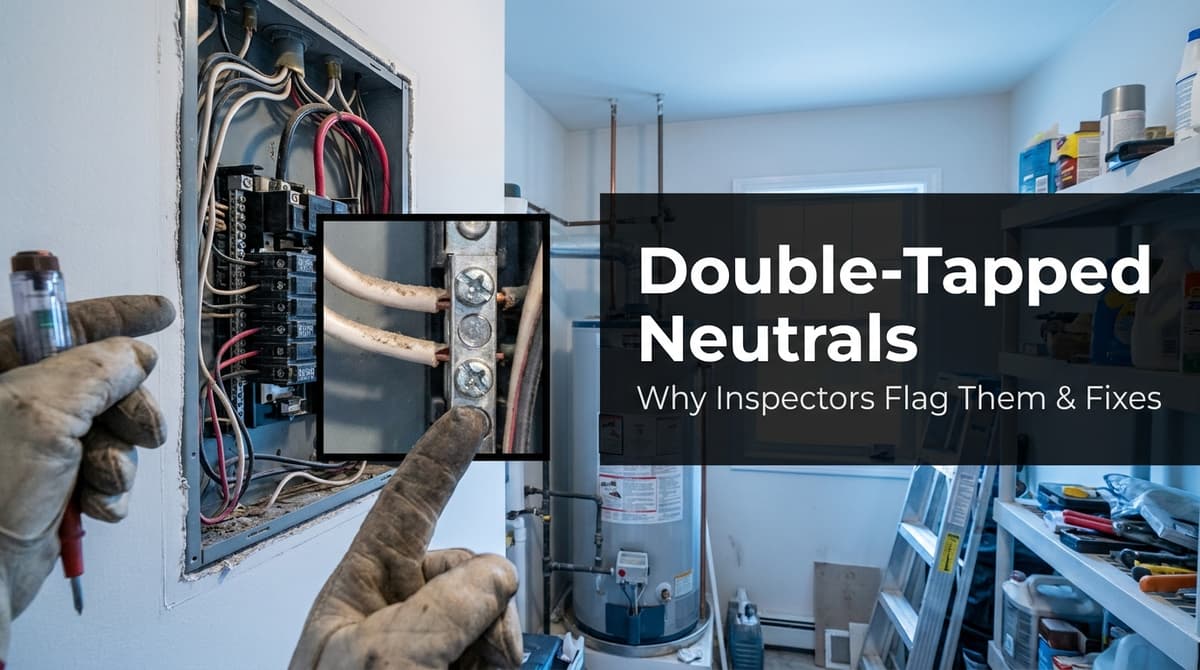
“Double-Tapped Neutrals” on Your Inspection? Here’s What It Means
We recently got a call from a homeowner — let’s call her Kelly — who was in the middle of selling her house. Her buyer’s home inspection came back with a note that sounded pretty intimidating:
“Double-tapped neutrals were observed in the electric panel. Electrician to separate the neutral wires into each individual port.”
Kelly told us, “I have photos, but I’m not totally sure what they mean. Is this a big deal? Is it expensive? What do I need to give the buyers once it’s fixed?”
We walked her through what was going on, gave her a ballpark estimate (around $500 in her case), scheduled a visit, and later provided a written correction report with before-and-after photos for her buyers.
If you’re in the same boat, let us walk you through what double-tapped neutrals are, why inspectors flag them, how we fix them, and what you can expect in terms of cost and documentation.
What Are Double-Tapped Neutrals?
Inside your main electrical panel, each circuit has a hot wire and a neutral wire that return power back to the service. The neutrals terminate on a metal bar called the neutral bus bar.
A double-tapped neutral happens when more than one neutral wire is landed under the same terminal screw on that bar. In other words, two (or more) neutrals share a spot that was designed for just one.
Most residential panel manufacturers and modern electrical codes require only one neutral per termination. Ground wires are sometimes allowed to share a terminal (depending on the panel and code cycle), but neutrals are different and must each have their own slot.
Why Double-Tapped Neutrals Are a Safety and Code Issue
Homeowners often ask us, “If it’s been this way for years, why is it suddenly a problem?” The issue isn’t that your house is about to burn down; it’s that the connection is less reliable and not code-compliant.
Here’s why inspectors flag it:
Loose connections: Two round wires under one flat screw don’t always clamp evenly. One wire can end up loose, which can cause arcing, heat, and intermittent problems.
Troubleshooting headaches: When neutrals are doubled up, it’s harder to identify which wire belongs to which circuit. That makes future repairs and upgrades more confusing and time-consuming.
Manufacturer instructions: Panel makers specify “one neutral per hole.” Ignoring that voids the listing of the panel and conflicts with the National Electrical Code.
Lender and insurance requirements: Many lenders and insurers expect obvious panel defects to be corrected before they sign off on a home sale.
So while a double-tapped neutral doesn’t always come with visible symptoms, it’s a known weak point that inspectors are trained to call out.
How Inspectors Spot Double-Tapped Neutrals During a Home Sale
In Kelly’s case, the inspector opened the panel cover, scanned the neutral bar, and saw multiple neutrals sharing the same screw. That’s a textbook “double-tap” note on an inspection report.
Typically, the report will include:
A brief description: “Double-tapped neutrals present in main panel.”
A photo or two of the neutral bar showing the doubled wires.
A recommendation: “Have a licensed electrician separate neutrals into individual terminals.”
Sometimes that’s the only electrical issue on the report, just like it was for Kelly. It still feels urgent because it can hold up closing until it’s corrected and documented.
How We Fix Double-Tapped Neutrals
Before we touch anything, we start by turning off power to the panel and verifying it’s safe to work. From there, the basic fix is straightforward in concept: give each neutral its own proper termination. How we get there depends on how crowded your panel is.
1. Separating neutrals into individual ports
This is the ideal scenario. If your neutral bar has open spaces:
We loosen the screws with doubled-up neutrals.
We move each neutral to its own available terminal.
We snug everything down to the manufacturer’s torque specs.
In many panels, this is a relatively quick fix — the time is mostly in working carefully and double-checking our work.
2. Combining circuits and rebalancing loads
Sometimes the neutral bar is already packed. That’s when we may need to get more creative, like we told Kelly on the phone. We might:
Combine compatible circuits using a listed two-pole or “tandem” breaker, where allowed by the panel labeling.
Re-organize breakers so we free up neutral spaces without overloading any one circuit.
Add a neutral bar kit (if the panel is listed for it) to create more proper termination points.
While we’re doing this, we’re very careful about avoiding overloads. That can mean tracing which breaker controls what and making sure heavy-use circuits (kitchen, bath, HVAC) are distributed sensibly.
3. Circuit labeling and panel housekeeping
Panels with double-tapped neutrals are often panels that have been “added onto” over the years. While we’re in there, we often:
Label circuits clearly so future owners know what each breaker controls.
Tidy up wiring so conductors are routed neatly and not under strain.
Note any other issues we see, like missing panel blanks or corrosion.
This doesn’t just satisfy the inspector; it makes the panel safer and more user-friendly for whoever lives there next.
Cost and What to Expect During the Visit
For most standard homes, we’re usually comfortable giving a rough estimate around $500-700 for correcting double-tapped neutrals, just like we told Kelly. That typically covers:
Travel and setup
Inspection of the panel and documentation of existing conditions
Separating neutrals, re-terminating, and any needed circuit combining (if appropriate)
Basic labeling and cleanup
Final testing and documentation
The cost can be a little less or more depending on:
How many circuits are involved
How crowded your panel is
Whether additional parts (like a neutral bar kit or new breakers) are needed
Most appointments take about 2-3 hours. The main variable is how much detective work is required to trace and rebalance circuits safely.
Documentation You Can Give Buyers After the Repair
One of Kelly’s biggest questions was, “What do I show the buyers to prove this is done?” We handle that for you. After we finish, we typically provide:
A written summary of the corrections (referencing the inspector’s note)
Before-and-after photos of the panel and neutral bar
The date of service and our license information
Most buyers and real estate agents are satisfied with a clear invoice plus a short correction report and photos. You can forward this to your agent, upload it to your transaction portal, or leave a printed copy in the home binder.
When to Call an Electrician
If your inspection report mentions double-tapped neutrals, it’s worth taking care of sooner rather than later — especially if you’re under contract to sell. It’s a common, fixable issue, and with proper documentation, it doesn’t have to delay your closing.
Whether you’re selling your home like Kelly or just trying to get your electrical system up to code, we’re happy to take a look, separate those neutrals properly, and leave you with a safer panel and paperwork that keeps everyone — inspectors, buyers, and lenders — comfortable.